Today we started with modern architecture, Caixaforum, and now a museum of modern art – Centro de Arte Reina Sofía, home to Pablo Picasso’s famous work, Guernica.
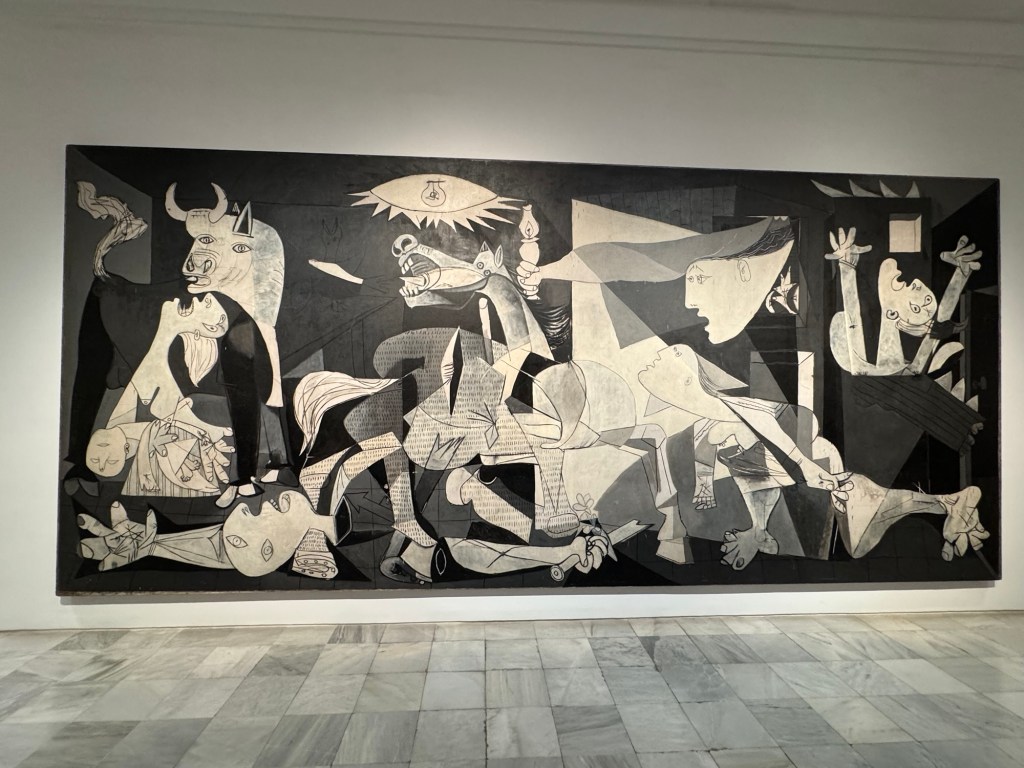
Guernica (1937) is a monumental (3.49 ×7.8 meters) oil painting on canvas, created as a powerful anti-war statement following the Nazi German bombing of the Basque town of Guernica during the Spanish Civil War. Painted in a monochromatic palette of black, white, and gray to mimic news photography, the mural, displayed at the Museo Reina Sofía in Madrid.
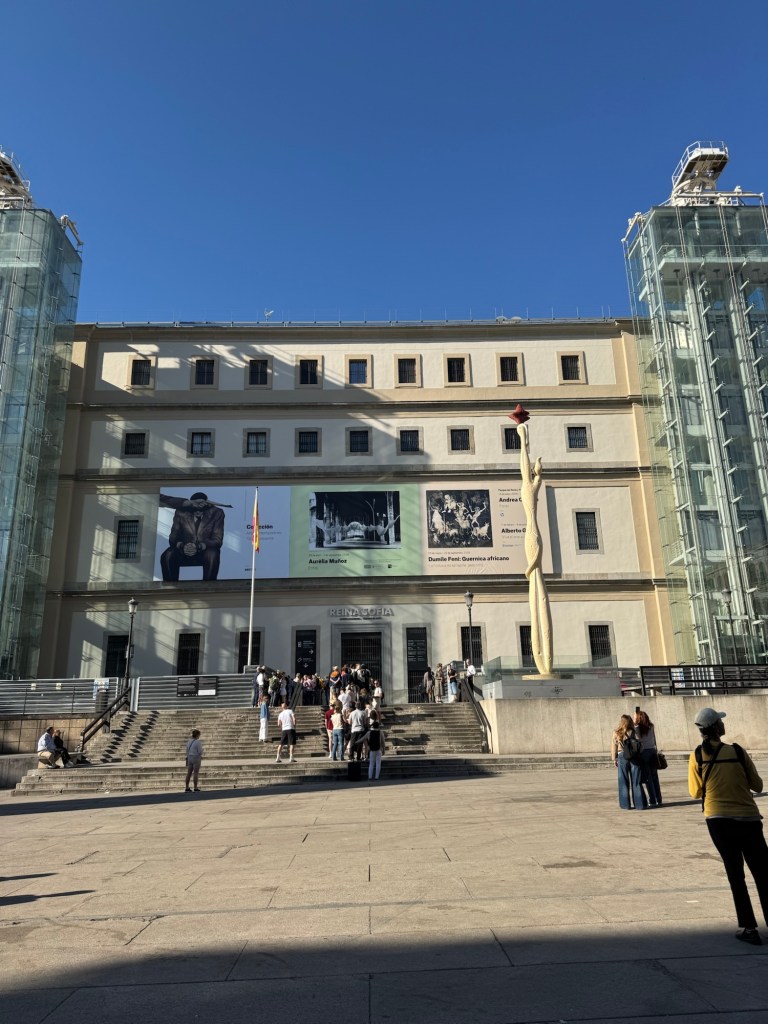
Centro de Arte Reina Sofía
Picasso utilizes Cubist and Surrealist techniques to depict the chaotic suffering of civilians and animals.
Some of the symbols identified in this work include:
- The Bull: symbolising brutality, darkness, or fascism. It is also sometimes interpreted as a representation of Spain’s spirit of endurance, looking on with a vacant, shocked expression.
- The Wounded Horse: Located at the center, the horse embodies the suffering of the Spanish people. Its shrieking pose, combined with its wounded body, represents humanity violated by modern technological war.
- The Mother and Dead Child: A direct reference to a Pietà, representing the grief and destruction of innocent life.
- The Lightbulb/Eye: Positioned above the horse, this is widely interpreted as the technological, impersonal eye of destruction—or perhaps the eye of God watching the scene.
- Broken Sword/Flower: A fragmented statue of a soldier on the ground holds a broken sword, representing the futility of war. However, a small, blooming flower sprouts from the broken weapon, signifying a fragile hope.
- The Woman with the Lamp: Emerges from a window to bear witness to the scene, possibly holding a tiny flame of hope or representing the truth of the event.
The effects;
- Monochromatic Palette: By limiting the colors, Picasso increases the intensity of the drama, creating a stark, journalistic effect similar to the news reports that informed him of the attack.
- Composition and Technique: The painting is arranged in a pyramidal, chaotic structure reminiscent of a triptych, forcing the viewer to confront the destruction of space. The style combines angular, fragmented Cubist objects with the disturbing, emotive imagery of Surrealism.
- Historical Context: Commissioned by the Spanish Republican government for the 1937 Paris World’s Fair, it was designed to highlight the atrocities of the war to a global audience during the Civil War in Spain (1936-39).
- Significance: It serves as a universal, timeless anti-war monument. Picasso himself stated that the bull represents “brutality and darkness,” and the work is a cry against the loss of humanity
Some of the studies Picasso made in preparation for the work itself:
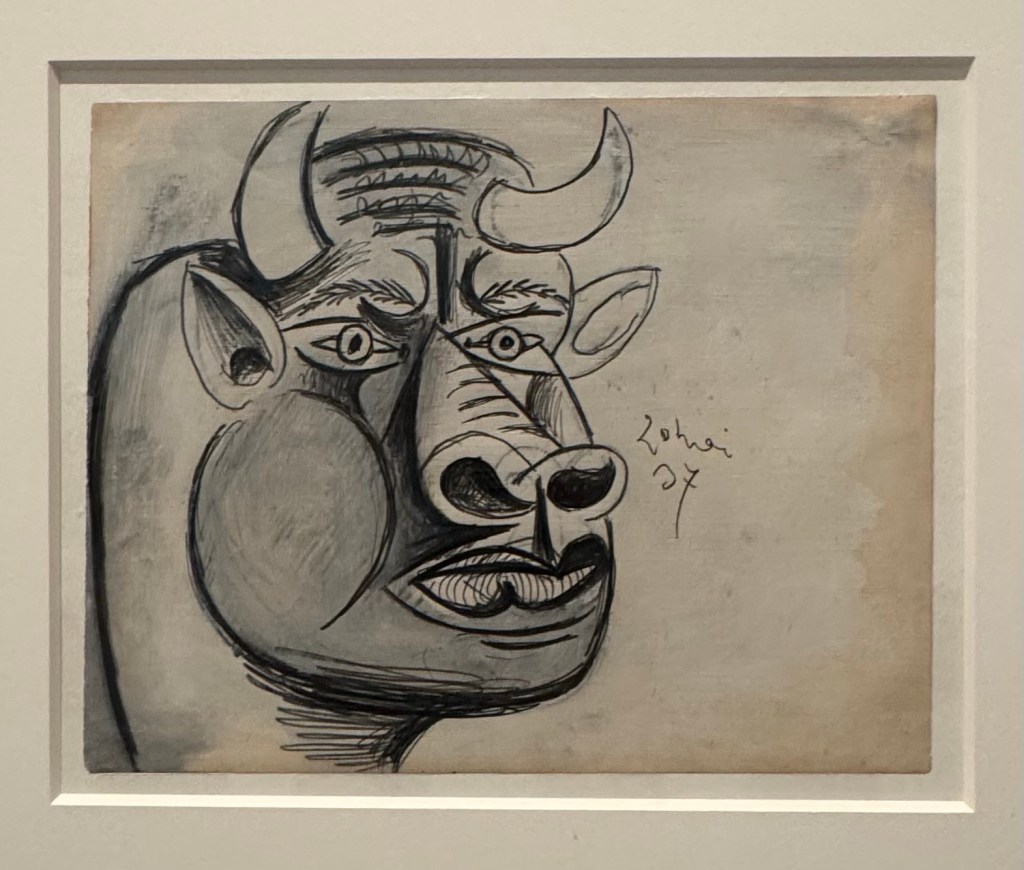
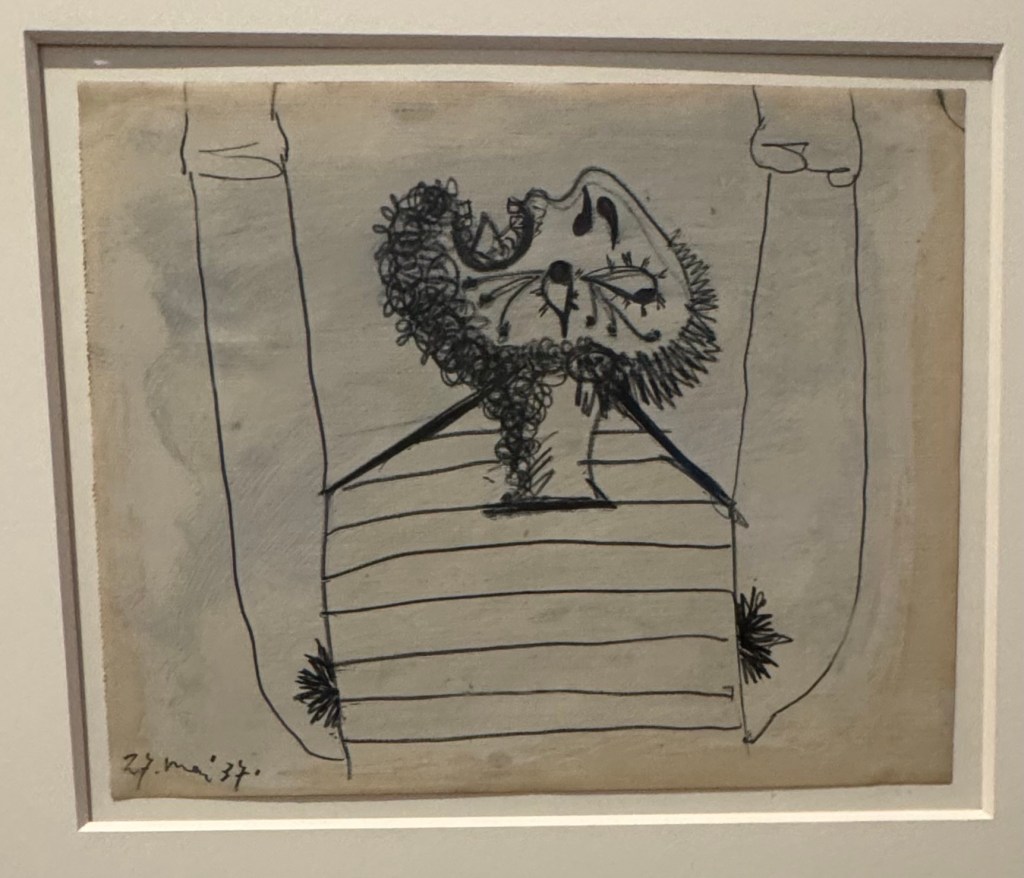
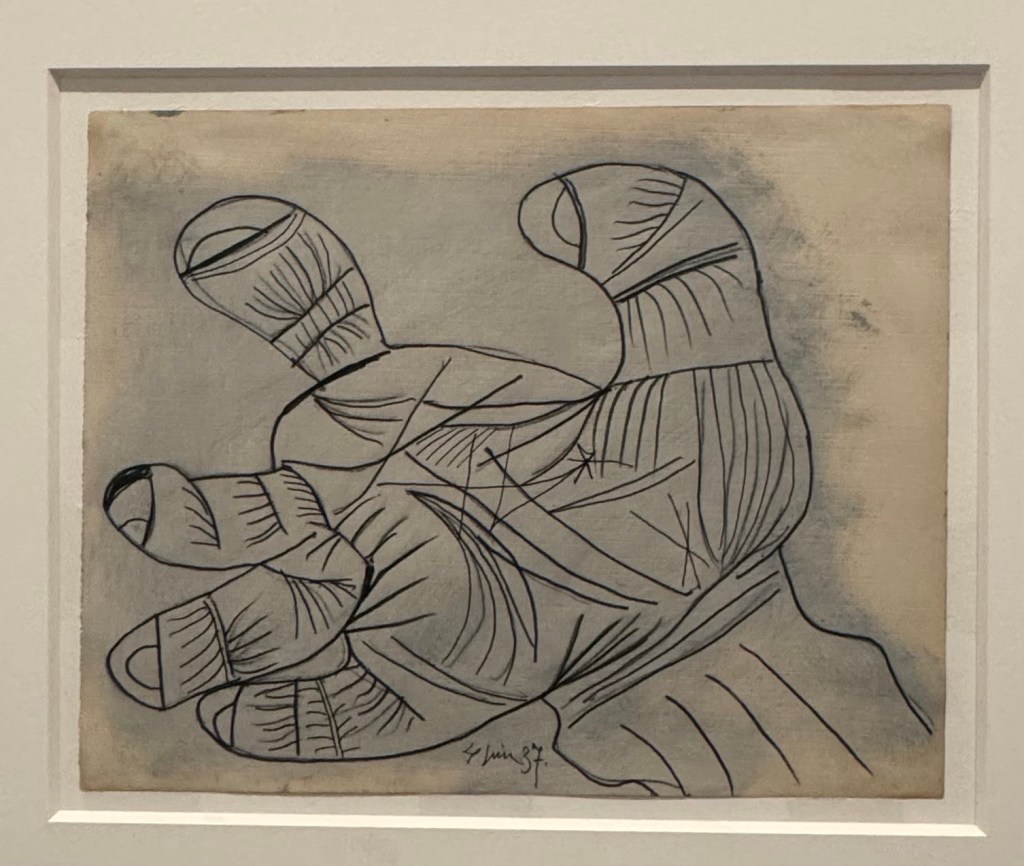
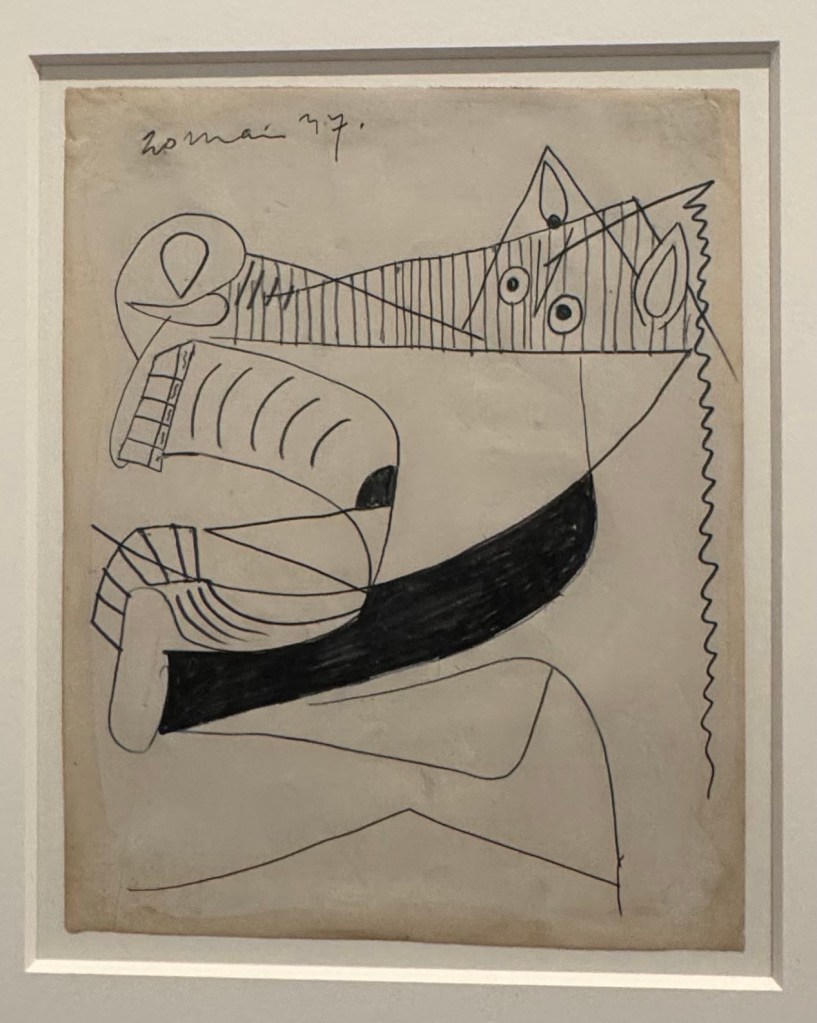
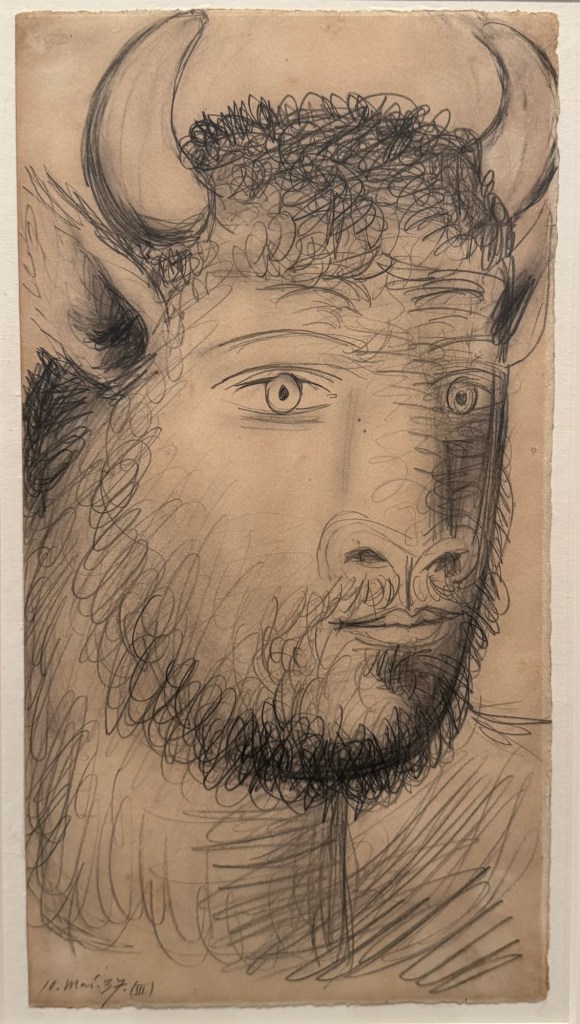
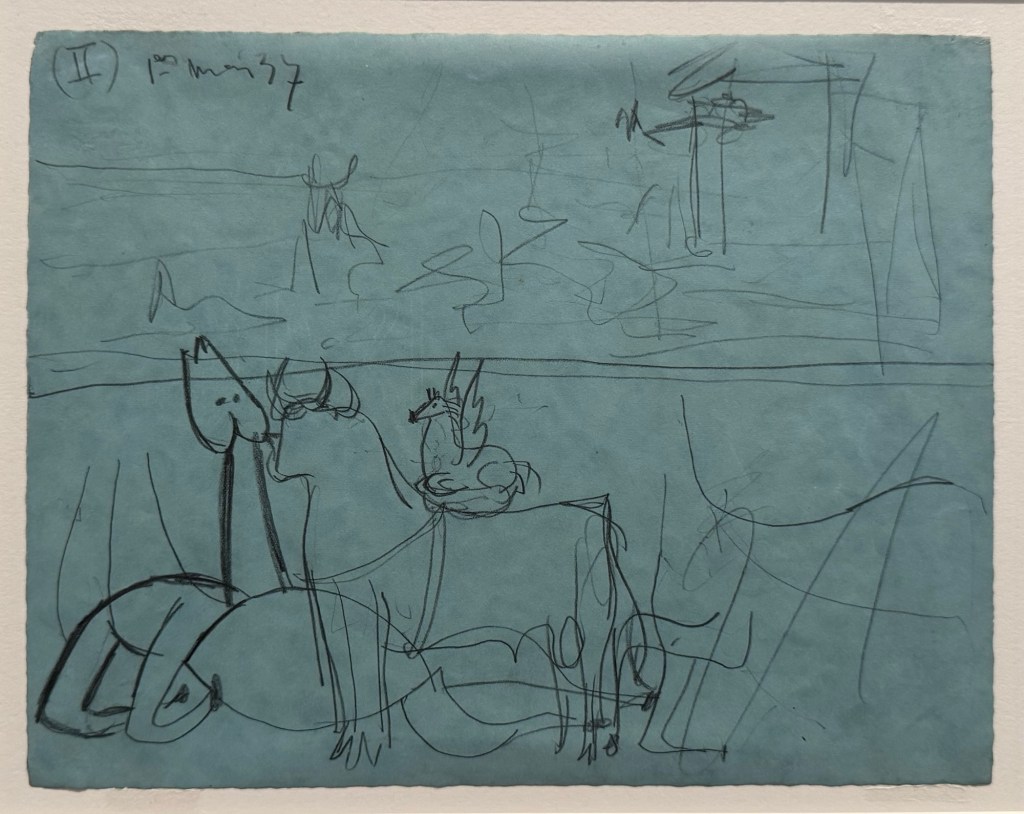
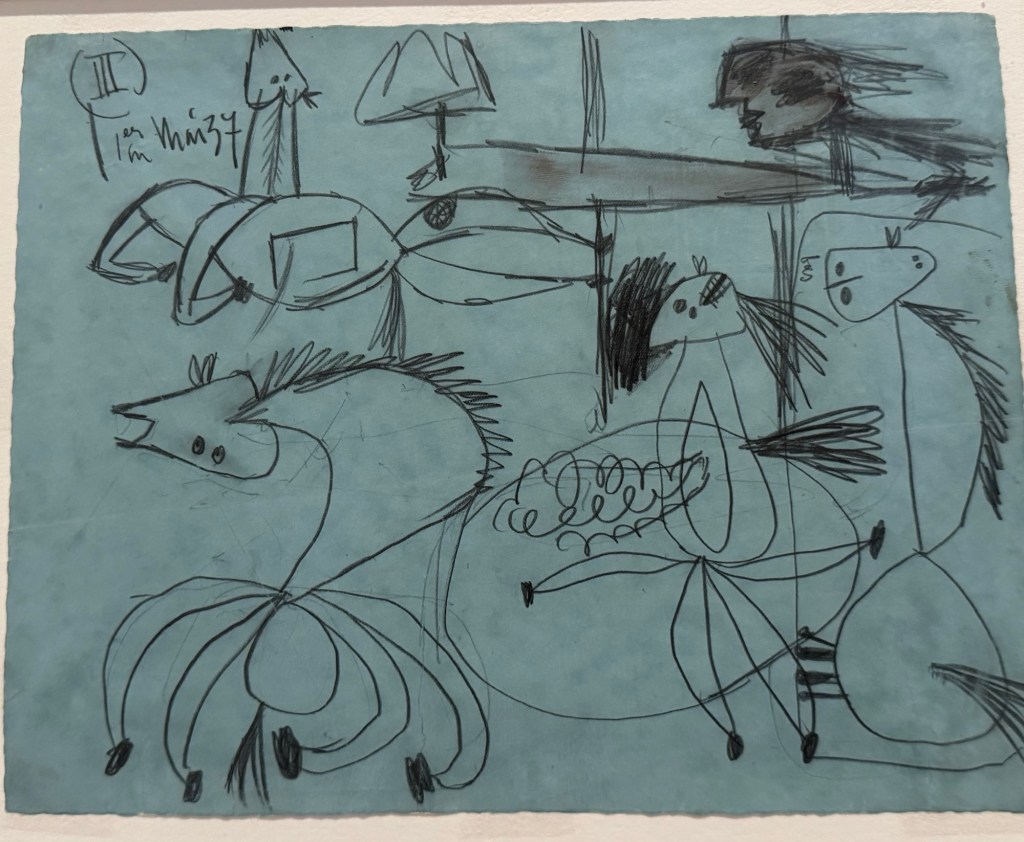
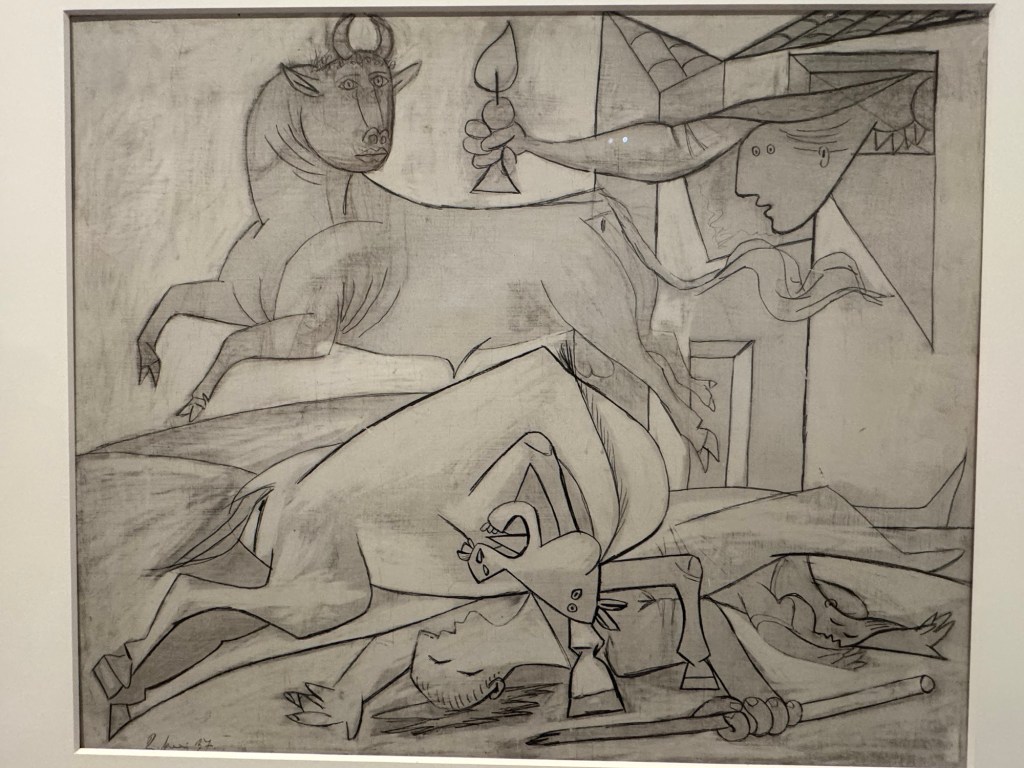
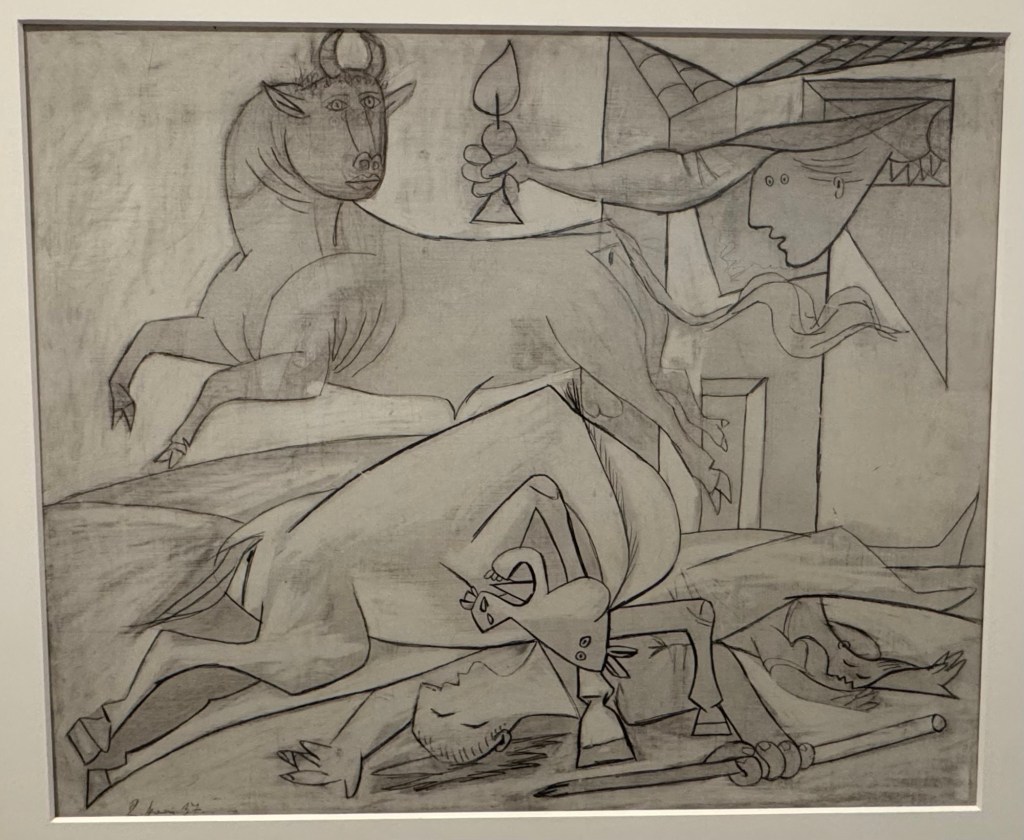
The Spanish Pavilion at the 1937 Parish World’s Fair was the venue for the first exhibition of Guernica.
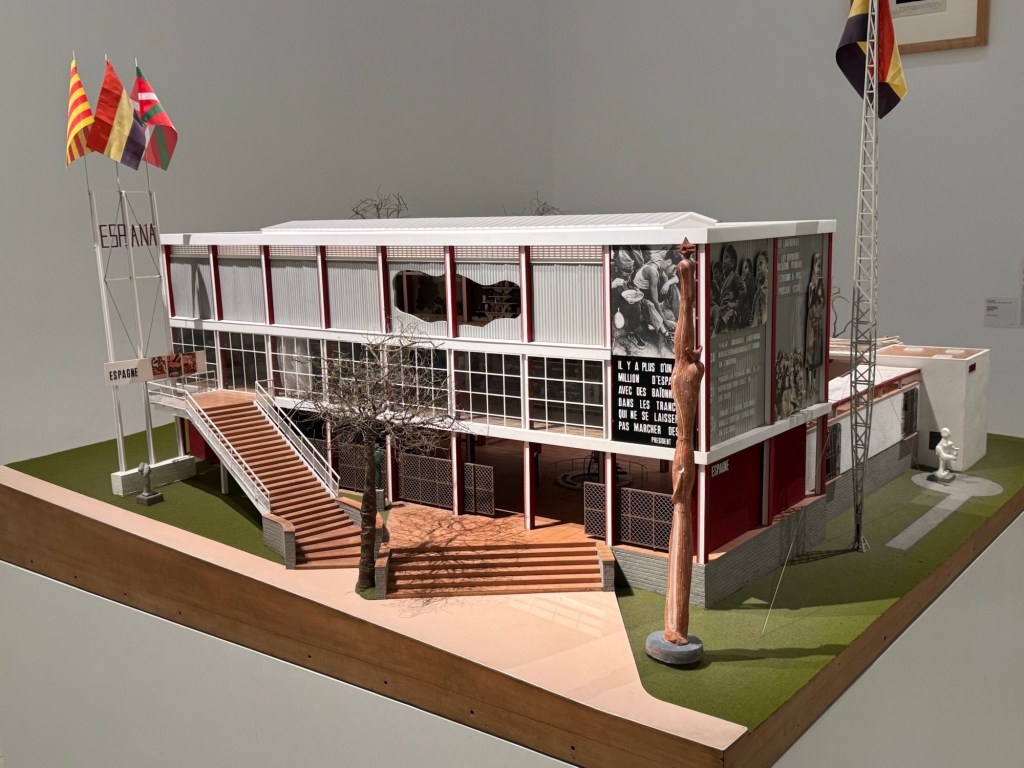
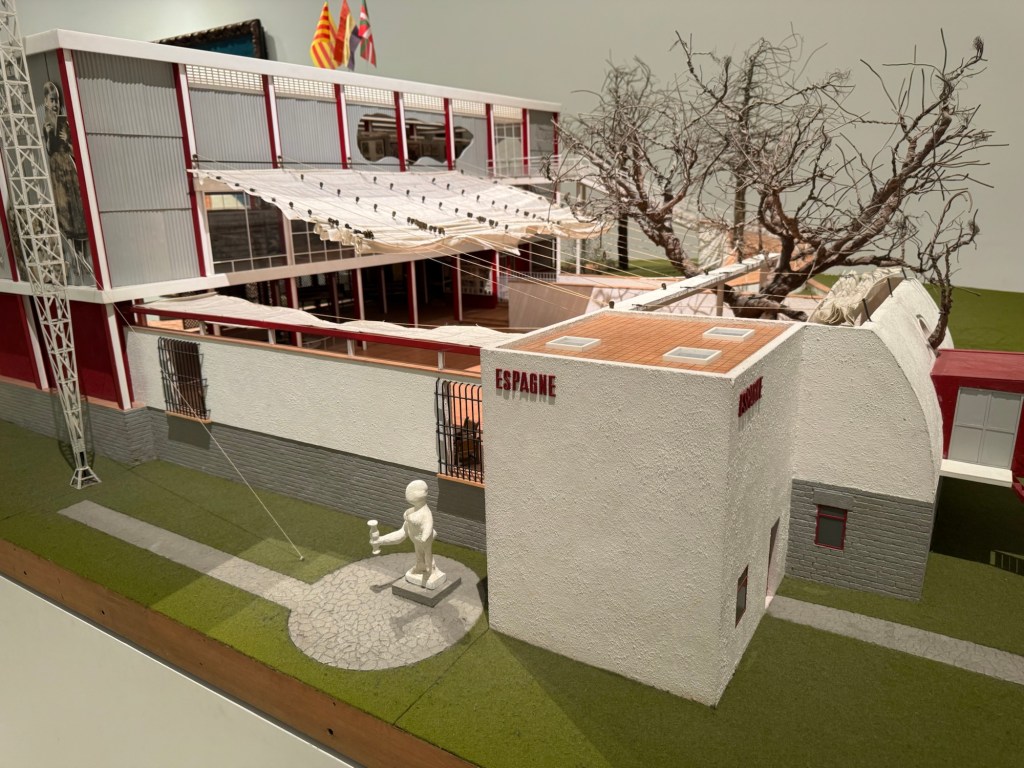
Outside the pavilion was a work of sculpture, shown in white in the model above, was a concrete sculpture – Woman with vase (1933).
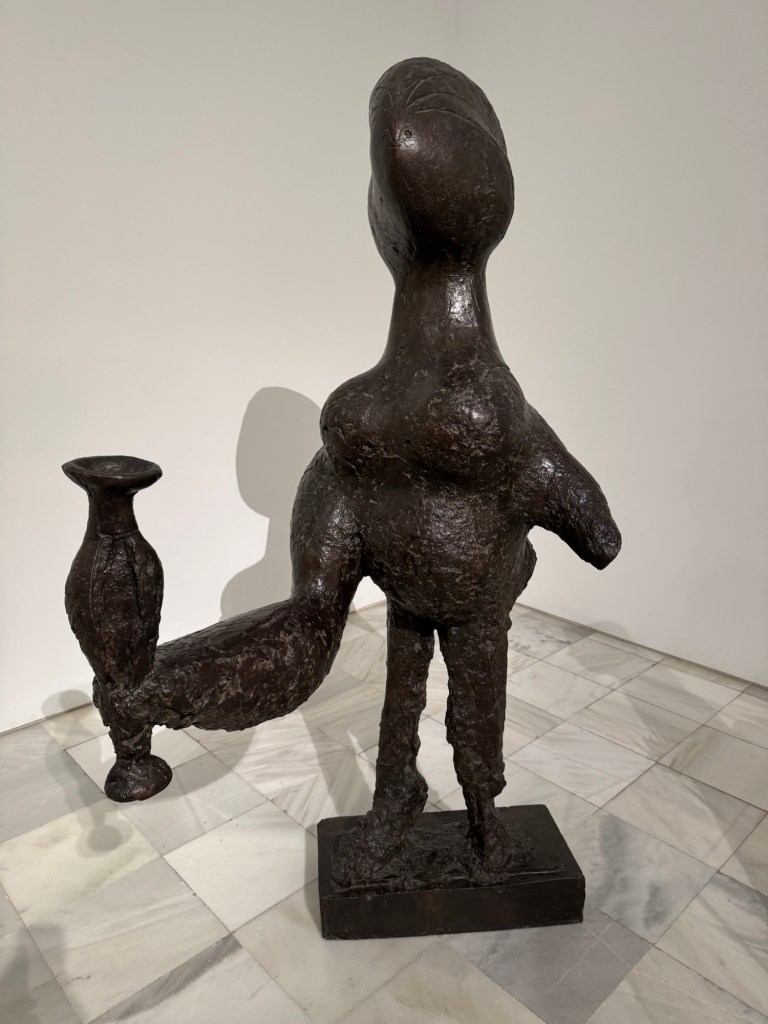
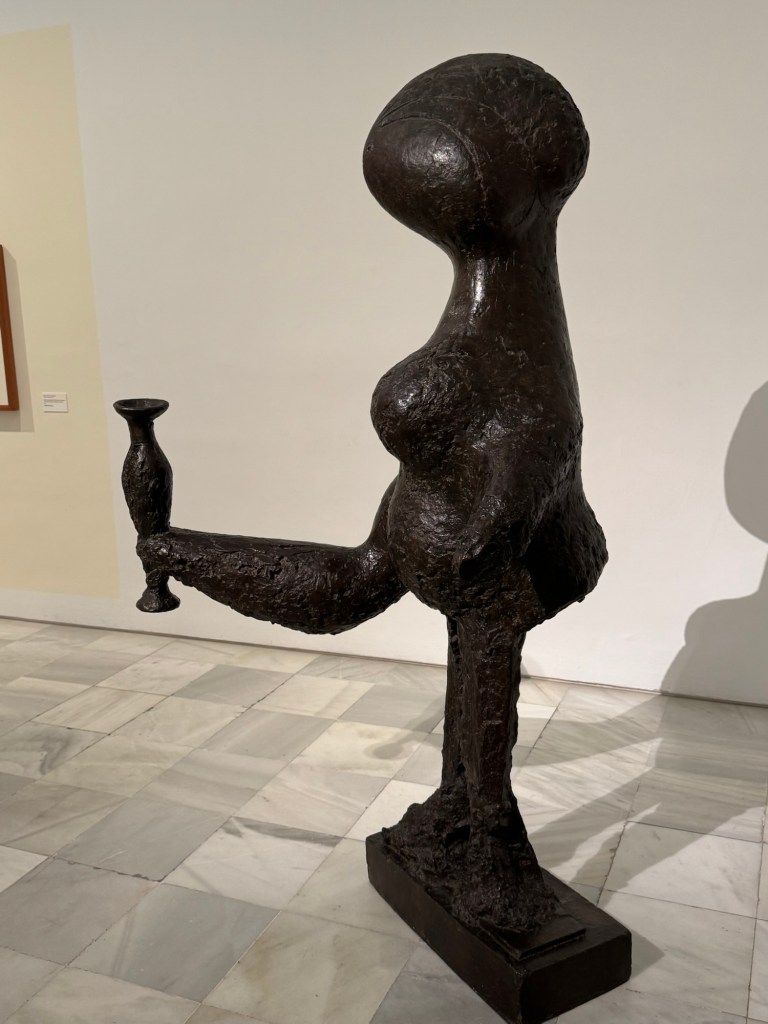
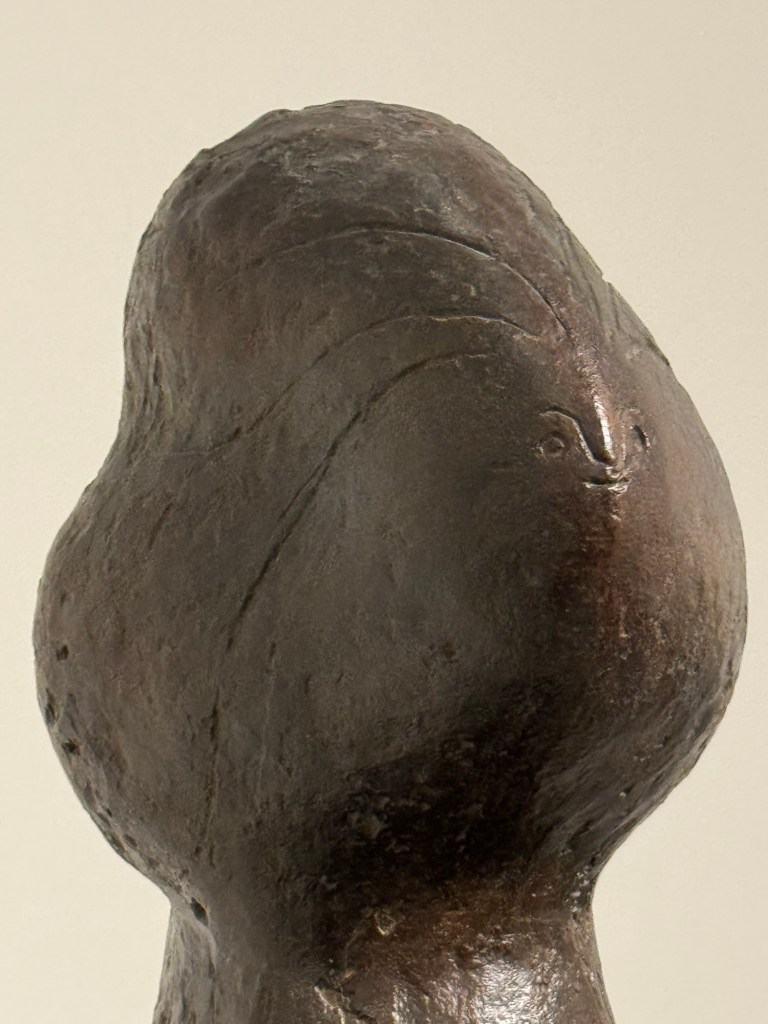
Sculptured in the summer of 1933 in Burgundy, using traditional methods of clay modelling and plaster casting, a concrete version was cast in 1937 for the Paris World’s Fair. This bronze version (one of 2) was cast at the end of Picasso’s life and bequeathed to the museum. The other stands above Picasso’s grave in the Château de Vauvenargues, just outside Aix-en-Provence in the south of France.

