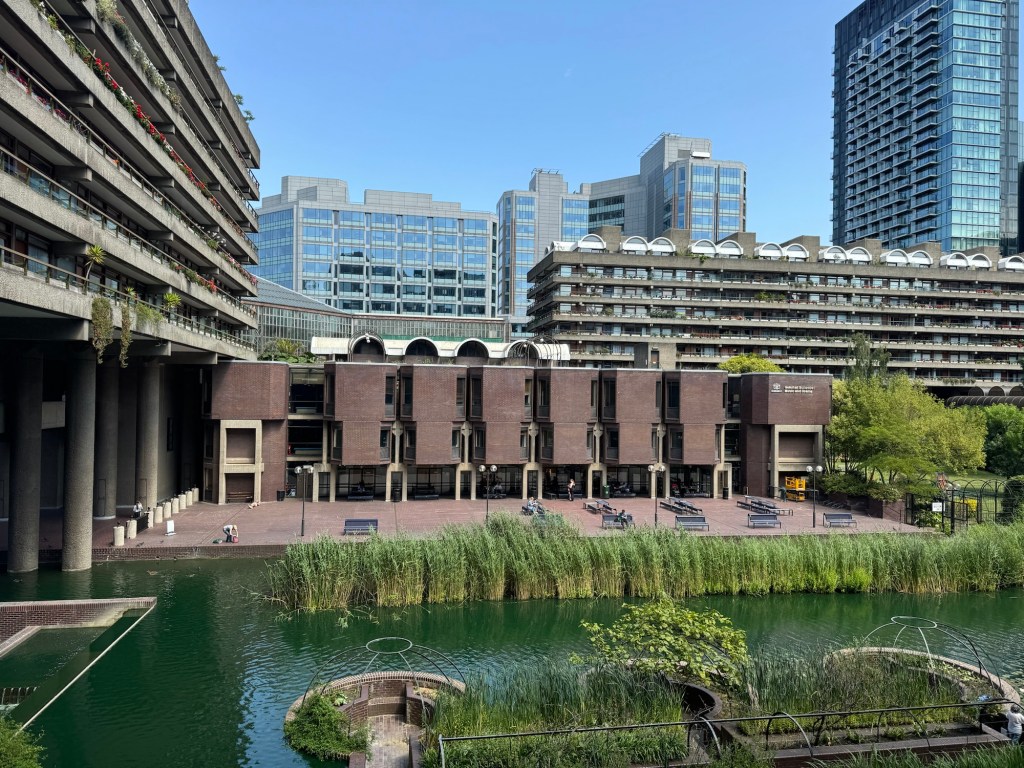
A tour of the 40 acre estate in the City of London built between 1955-1982 on a part of the City decimated during WW2.
Unlike many other estates built after that war, this is not strictly in a brutalist style but rather in a decorative modernist one.
Built by the local authority, City of London Corporation, it technically was a council estate but an upmarket one, the architects intended demographic being: “… young professionals, likely to have a taste for Mediterranean holidays, French food and Scandinavian design.” So The Barbican was unlike so many other former national but depressing housing estates in the UK.
In 1980 the 2,000+ apartments and houses were sold off and now cost millions of pounds to buy. In the high rise towers there are only 3 apartments per floor.
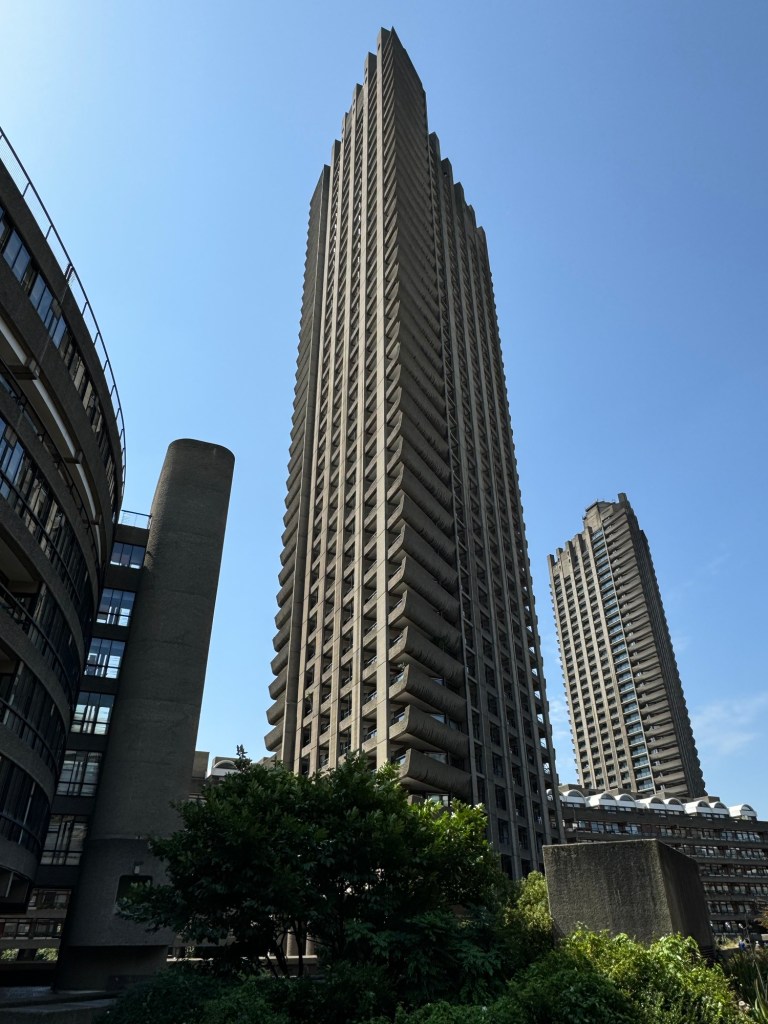
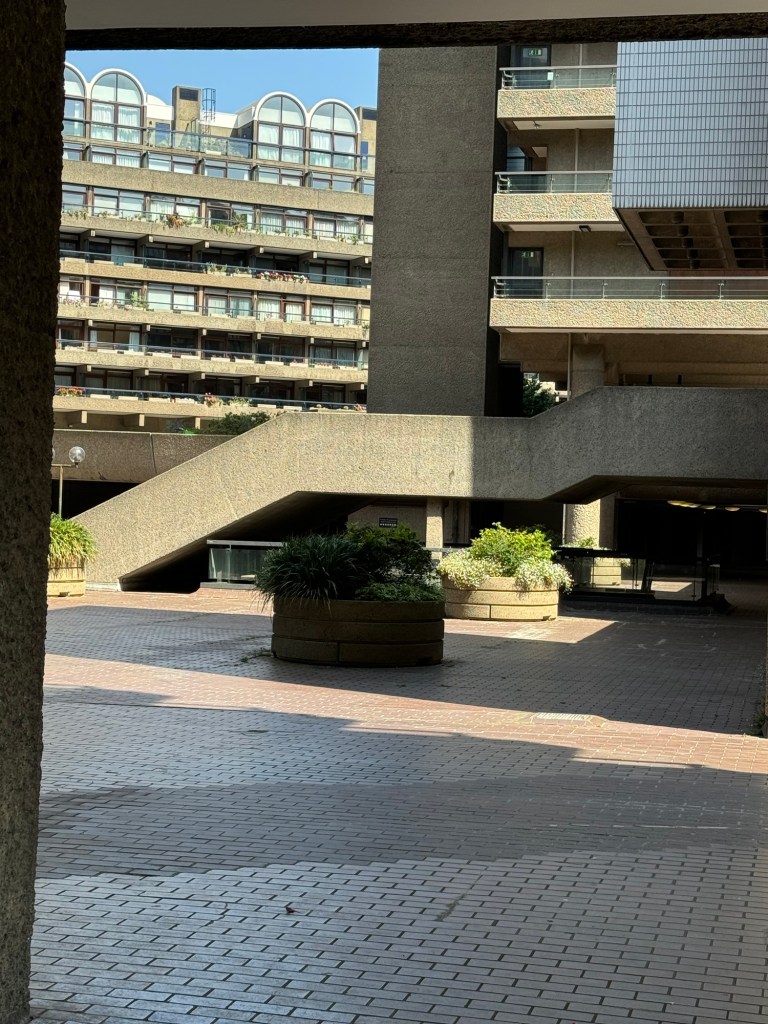
Originally, architects Chamberlin, Powell and Bon outlined plans for the terrace blocks to be covered with white marble, the towers to be coated with highly polished concrete, and columns to be finished in smooth, coloured concrete. It was even proposed that the balconies be surfaced with mosaic tiles.
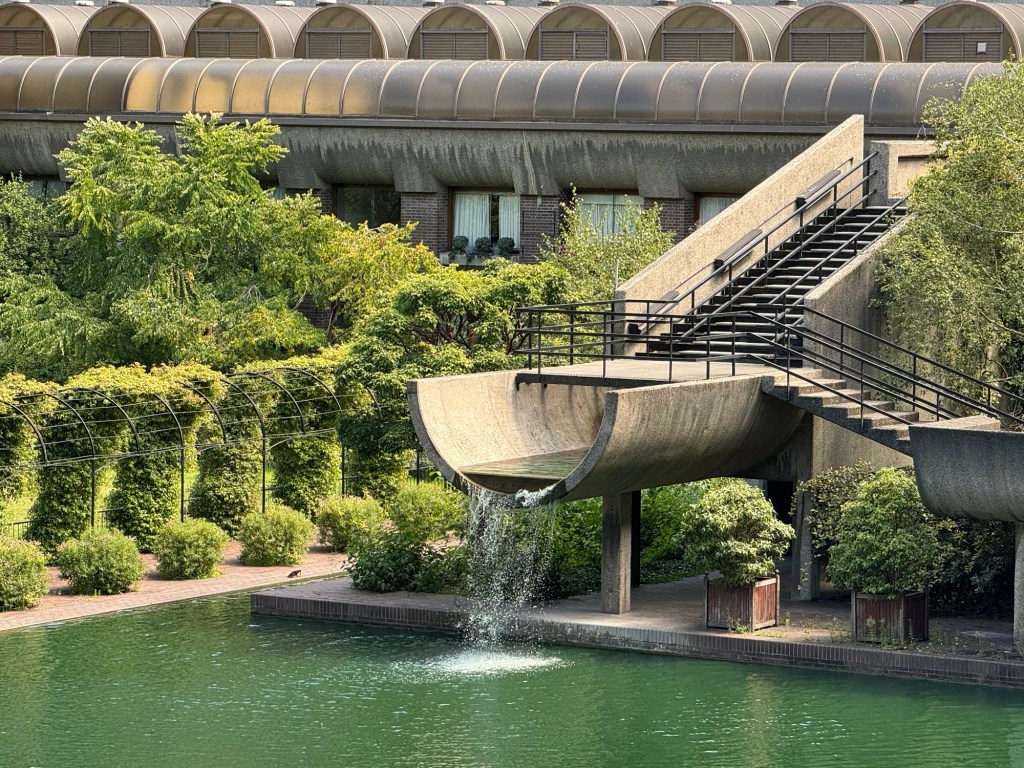
Perhaps unsurprisingly, this rather lavish and costly selection of materials was turned down by the City of London, resulting in the cheaper – although incredibly labour intensive – hammered concrete finish where the smooth concrete finish was chipped away leaving a textured finish.
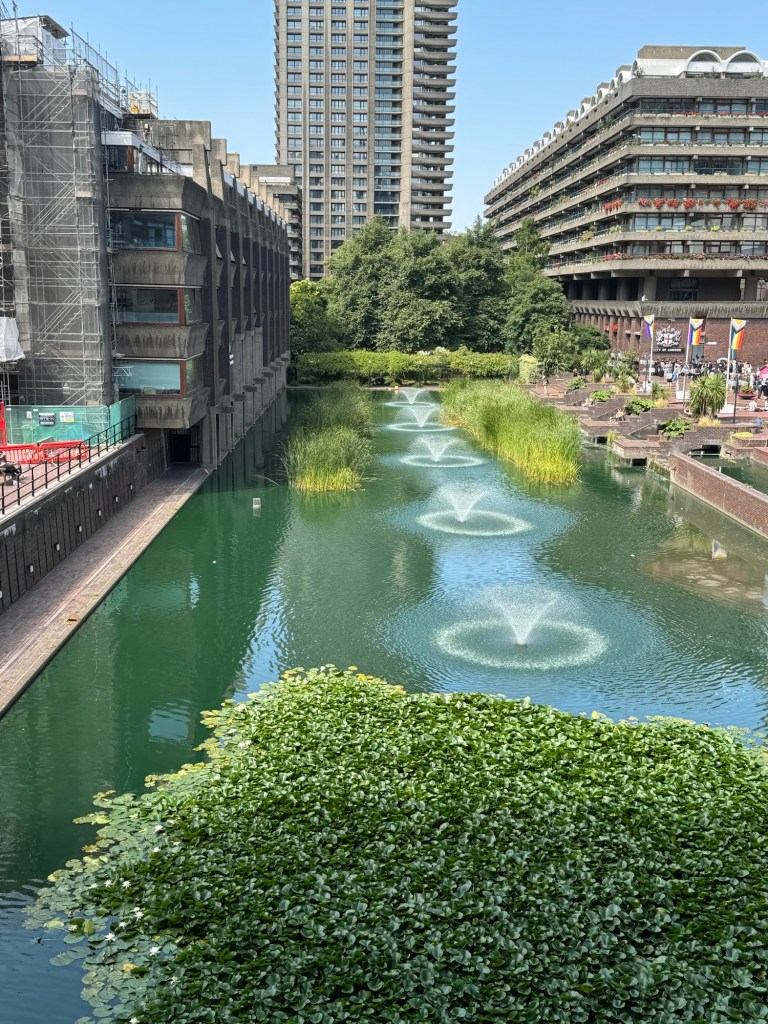
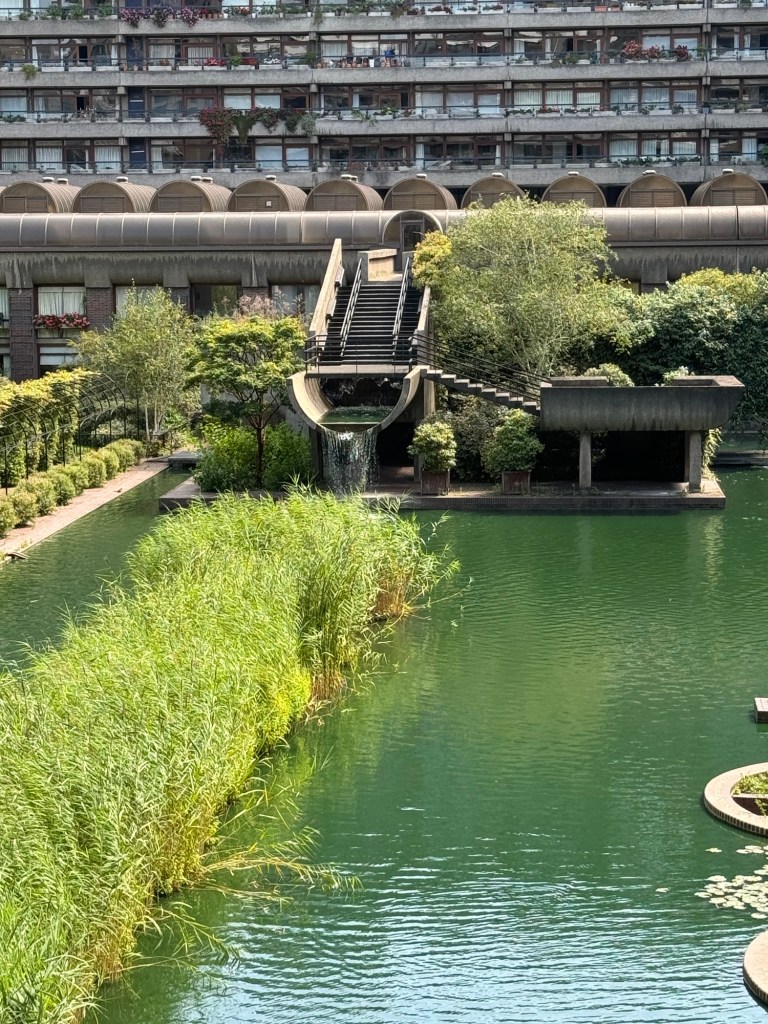
The site retains a portion of the London wall and a barbican ruin now surrounded by a lake.

The Barbican’s architects never explicitly called themselves Brutalists. They were influence by Le Corbusier but also drew inspiration from a large range of styles, and the Barbican does contain some contradictions. It was once planned to be far more decorative, covered with marble, colour and mosaic.
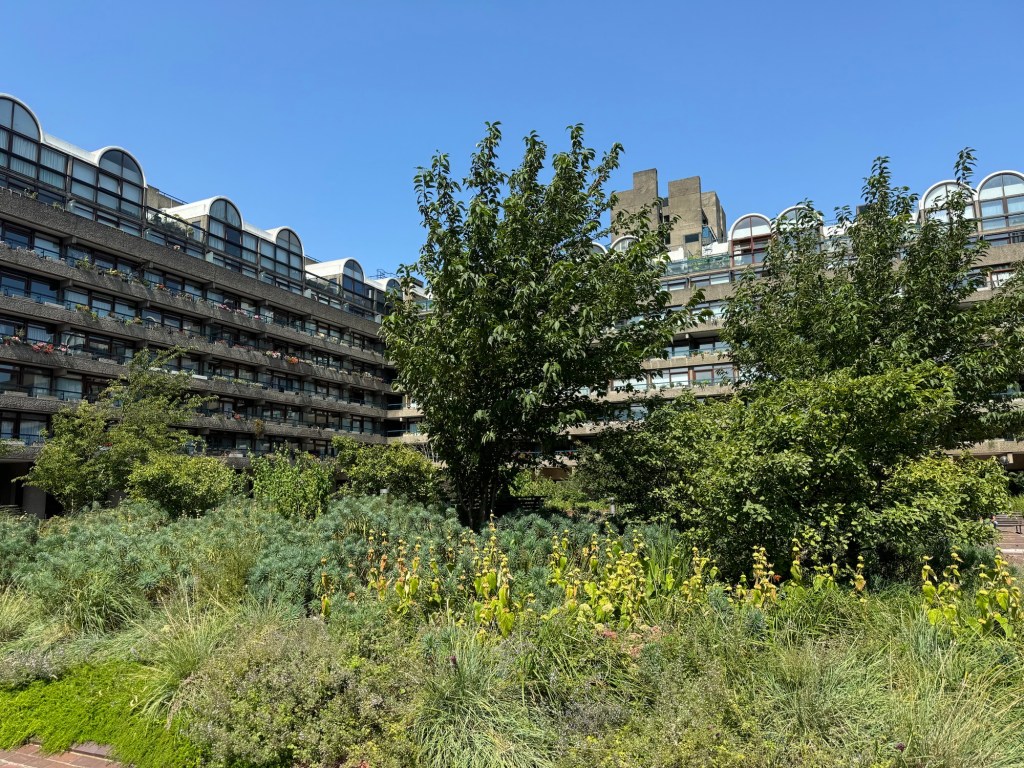
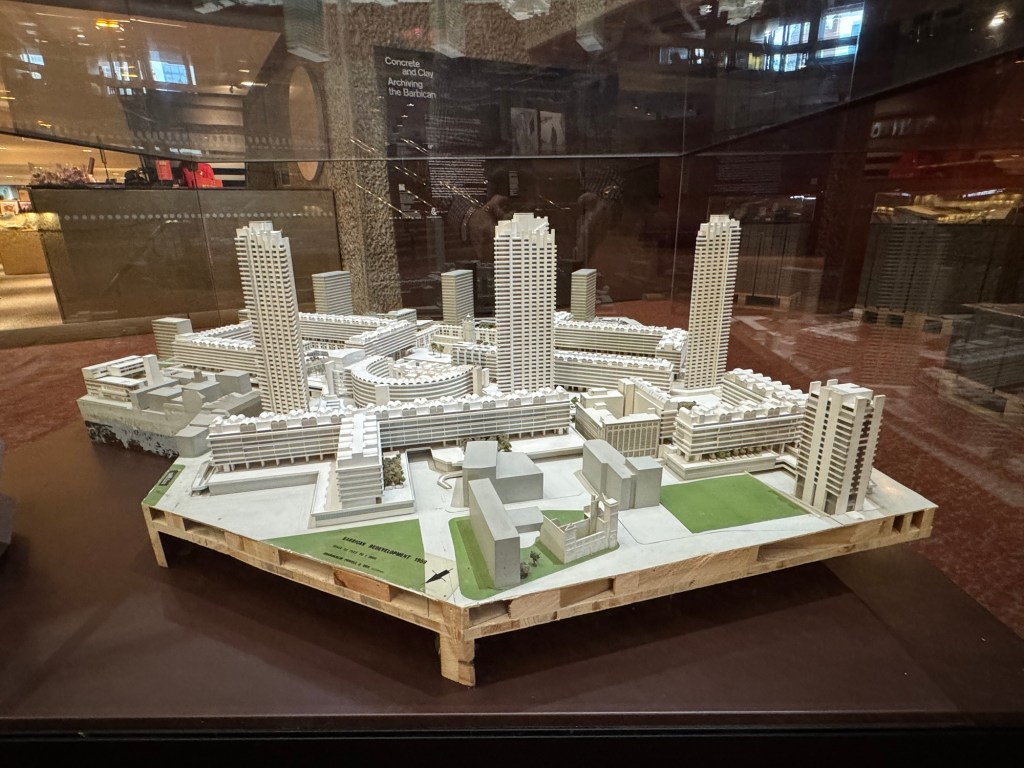
The estate is made up of three tower blocks, thirteen terrace blocks, two mews, and two blocks of townhouses. The towers sport perhaps the most well-known names, with Shakespeare and Cromwell Towers named after William and Oliver respectively. Many others are named after notable figures who lived in or close to Cripplegate Ward, including Robinson Crusoe author Daniel Defoe (Defoe House), author of The Pilgrim’s Progress John Bunyan (Bunyan Court) and the poet and writer Nicholas Breton (Breton House).
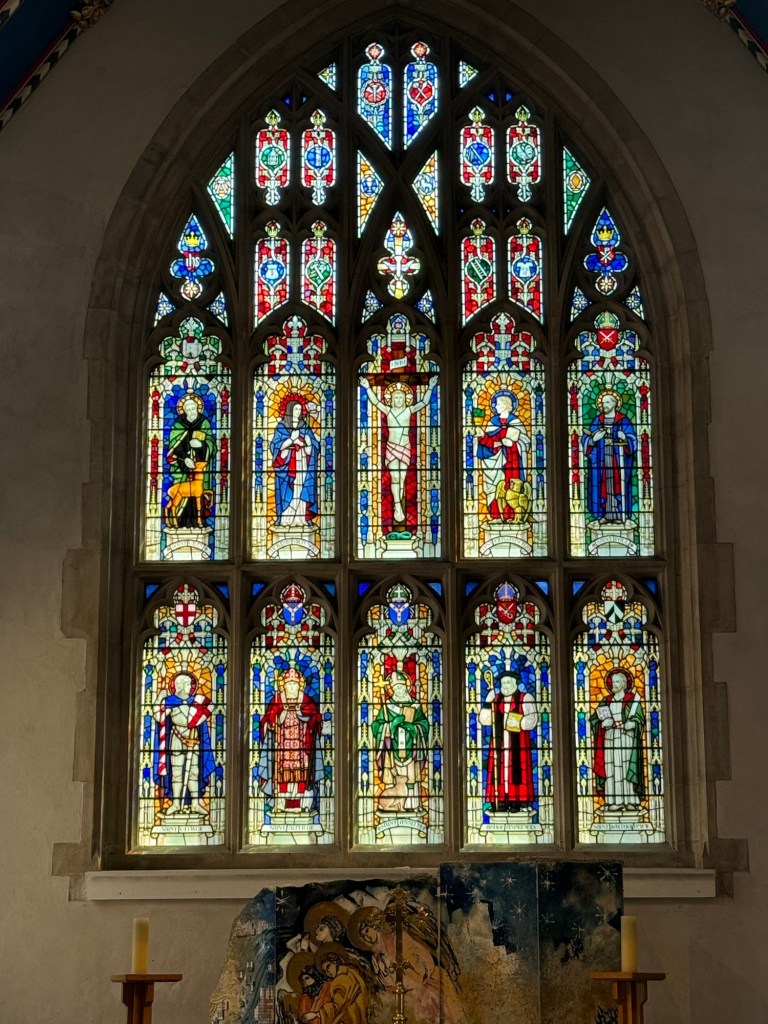
The Arts Centre, to which I will be returning this evening, was always planned as one of the many amenities on the doorstep of Barbican residents, along with shops, restaurants, pubs, schools and St Giles Cripplegate, the 14th century church which survived The Blitz in WW2.

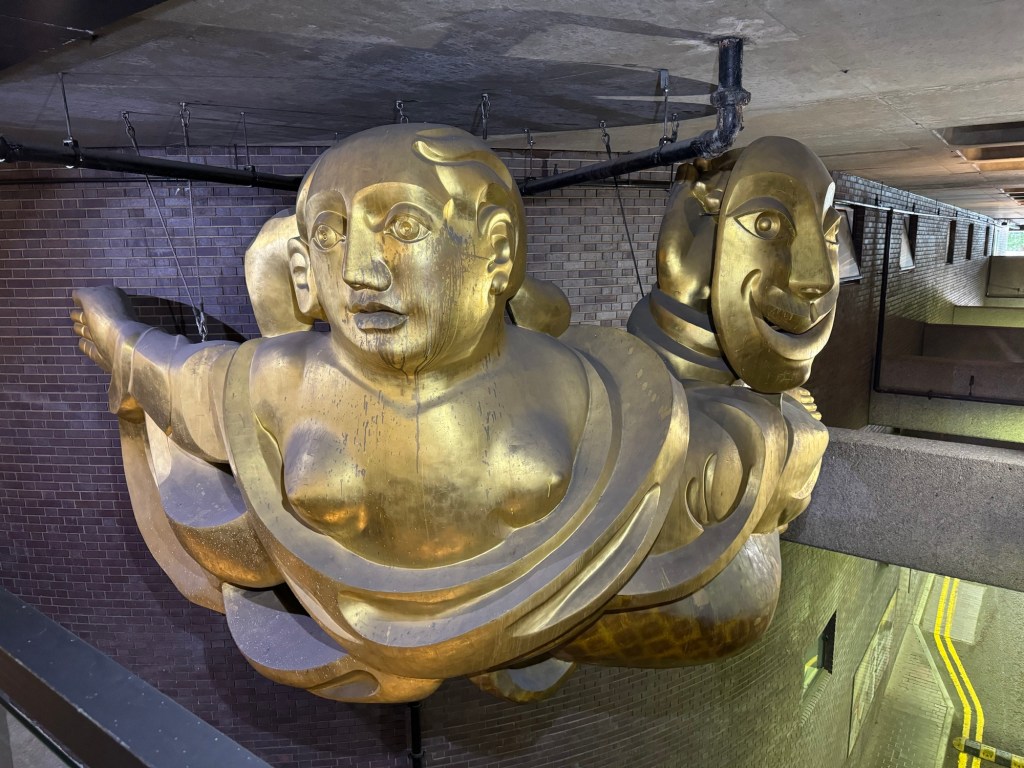
The Arts Centre is home to the Royal Shakespeare Company in London and the London Symphony Orchestra.
 Father M